Tuesday, October 5, 2010

6 Photographers - Diego Valdez

Larry Clark

Larry Clark
Untitled (T23), 1963
Black and white print
Tulsa Portfolio
14 x 11 inches


Larry Clark
Jonathan, Louie, Eddie, 2004
Negative: 2004, Print: 2007
Pigment Print
55 3/4 X 82 1/2 inches (141.61 X 209.55 cm)
Larry Clark
Untitled (T32), 1971
gelatin silver print
Tulsa Portfolio
14 x 11 inches

Larry Clark's photos are a representation of his child hood. He lived in Tulsa, Oklahoma and gained most of his photographic technique by being his mother's assistant when she did door to door baby photography. He left his home to pursue photography and filmmaking, however when he came back he found all of his childhood friends addicted to drugs. His Tulsa Portfolio depicts these images in realistic yet beautifully aesthetic way.

Ryan McGinley


These Photos are from Ryan's series "M.I.A." Ryan is a world renowned commercial photographer and has work that closely ties through artistic photography. He has strong attention to vivid and over saturated color on some images, however he puts extreme detail in his black and white photographs.


Jonathan Mehring


These Photos come from Jonathan's "Southeast Asia" series. He went to VCU and got a BFA in Communication Arts and Design. His work primarily has a photojournalistic sense. However He is very skilled in capturing action shots of professional skateboarders. His client list is very intensive and includes corporations such as Red-bull and Nike.

Palmer Davis


American Gothic

Garden Tour

Flying Goose

These are photos from Palmers Series "American Stories." In this series he tries to tell a narrative with every photo he took. He says he is haunted by what could be, what is there and what has been lost.

Justin Visnesky


These photos come from the series called "Jimmy Stewart Doesn't Live Here Anymore."
The Series was developed to show the simpler time in life when Justin lived in Indian PA. They are shot to get the ordinary feel and spark the interest of something more.


Nick Gleis


Nick Gleis's Work is mostly deprived from a strict commercial approach. Major luxury airline companies hire Nick to photograph the upscale interiors as-well as exteriors on these planes. His work has an almost organic feel to it. With his attention to detail and artistic aesthetics, he has gotten the recognition of galleries to display his commercial work.

Monday, October 4, 2010

Take A Break

El Guincho - Palmitos Park


EDWARD SHARPE & THE MAGNETIC ZEROS - 40 DAY DREAM LIVE @ THE REGENT


RED HEADED WOMEN


CANDY

SOUND SCULPTURES from Daniel Franke on Vimeo.

Glenn Jodun - 1st Blog Assignment

From DIYPhotography - Patterned Photographs of Computer and Glass
This particular entry featured an interesting idea for a rainy weekend project.  The photographer/blogger Steve Hermitage set out to play with patterns and glass, specifically glass that bends light in interesting ways.  Basically, the project entails the creation of a simple pattern (though I believe a complex pattern may yield just as great or even better result) on your computer and then placing a glass, in this case a wine glass, in front to photograph through.  DIYPhotography only posted two examples of the project; however, Hermitage also included a Youtube tutorial of sorts to further elaborate on his process.

From BOOOOOOOM - You Were In My Dream
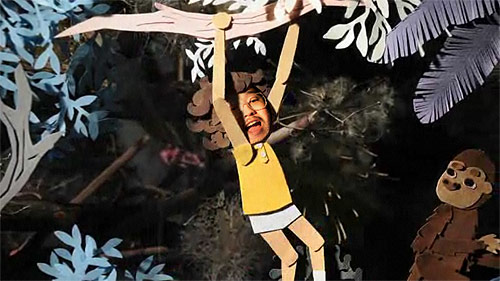
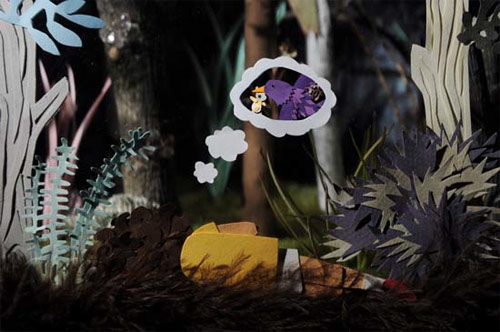
This post by Jeff on BO...OM, comments on his experience with a project known as "You Were In My Dream."  The project by Isobel Knowles and Van Sowerwine
takes a live video feed of the viewer's face and incorporates it into a stop-motion Utopian world that relies heavily on survival of the fittest.  The piece was created at the bequest of Experimenta with the theme of "Utopia" and seeks to showcase the adaptation and evolution of a species directly correlates to its survival, incorporating a world untouched by industrialization.

From State of the Art - Library of Congress Duplication Services

President Abrham Lincoln. January 8, 1864. Gelatin Print. Mathew B. Brady.
For about $40, you can now have 8x10 reprints made of photographs by the Department of Duplication Services at the Library of Congress.  The Library holds a huge store of photographs to choose from, the examples from the blog included Matthew Brady and Walker Evans though there are many more; however, it is important to note that the selection is limited by each photograph's individual copyright.  Also,  prices are subject to the size of the print and the quality of the paper being used. 

This blog posting only had one photo listed, but went ahead and found an example of Walker Evan's work to show:

Portrait of James Aghee. 1937. Photographic print.  Walker Evans.
For more information on requesting prints:  Department of Duplication Services

From The Online Photographer - Canon S95 Review

The S95. 2010. Edward Taylor.
Barcelona harbor. 2010. Drew Taylor.  Shot with S95.
The author of this blog is like most of us, or I'm assuming that, in that being college photographer we have probably become snobs to point and shoots over more professional DSLRs and such.  What starts as the author's shopping for a birthday present for his son quickly turns into a positive testimonial on one of Canon's newest point and shoots.  The camera itself is lightweight, complete with full-auto and manual controls, capable of shooting in RAW and JPG formats, and a resolution of ten mega pixels for about $400.00.  The author seemed quite pleased with the quality of the camera with its quality of prints being great for sizes under 16x20, the overall build of the camera, and its responsiveness - going as far as to say that he carries it over his more "professional" cameras unless the shoot's of a more important nature. 

From Conscientious - In behalf of the men who will never get out
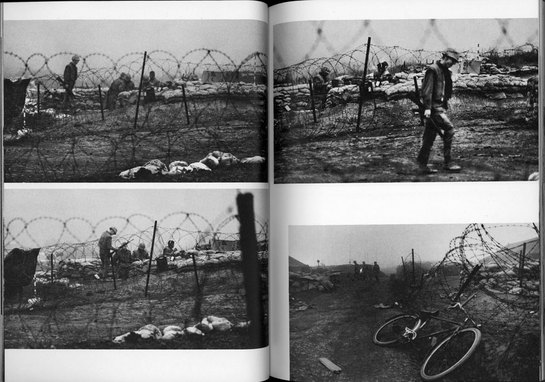
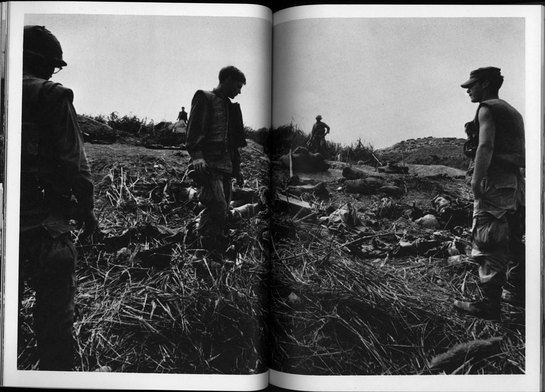
Photographs from the Vietnam War. David Duncan.
This post by Joerl Colberg is about how he and his wife, two estate sellers, come across a book of photography by the combat photographer David Duncan that they bought for all of five dollars.  The book, entitled I Protest!, seeks to inform the American people about the harsh cruelties of war and its painful reality - depicting images of mounds of war dead, the product of much devastation.  The author goes to question the content of the photographs, to question the Vietnam war, and goes on to draw a possible parallel to the Afghanistan; but the most important conclusion he comes to is how combat photography is approached today.  It's sterile, clean - visions of the enemy's dead, as well as our own, have ceased to be taken.

From Beyond Mega Pixels - Five Tips for a Better Portfolio

Untitled. 2010. Tiffany Joyce.
This entry offers advice on how to improve your portfolio.  Joyce starts with the presentation of a portfolio online, and recommends finding an alternate means to publishing your portfolio as opposed to Flickr or Shutterfly.  Instead, it would be better suited to either create your own website or make use of a blog through WordPress or Blogger - both of which offer templates specifically for photographs.  Her second recommendation is to keep adding content, but also makes use of the quality versus quantity axiom.  Furthermore, as you progress in your talents it's a good idea to take down older things as they begin to lose their luster.  The third step is to look for gaps in your photography, meaning the portfolio needs to be balanced.  You shouldn't have too many portraits, too many landscapes, and so on and so forth.  However, in step four, it is explained that if you have a specialty then by all means create a dedicated portfolio website around it to attract such clients, but also be aware of other clients and their needs and perhaps have a smaller portfolio site designed just for them as well.  The fifth and final tip is get feedback before ever posting the portfolio.  You'll want to know what friends, family, classmates, and so on think honestly before throwing your portfolio to the rest of the world.  That way, if something just isn't working, you can fix it before future clients pass judgment on a simple mistake.

Just as an added bonus, I wanted to share a particularly interesting blog entry I found on my own.

From An Open Ended Course in Photography - How To: Make Redscale Film

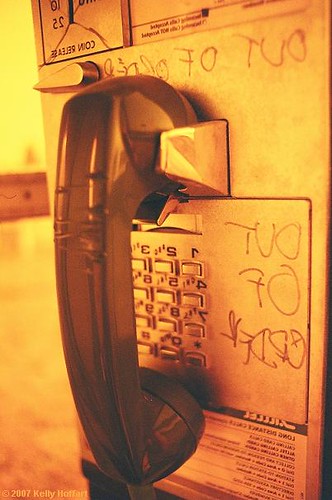
Untitled. Kelly Hoffman. 2007.
First of all, redscale is when the wrong side of a negative is exposed.  It's my understanding that the normal way of exposing and processing a color negative works by capturing blue light first and working down the color spectrum.  Redscale works in reverse - exposing the reds first, which due to the property of the light and the film causes the rest of the colors to have a red color cast as well as appearing slightly muted.  In order to create redscale film, you first of all have to be in a ligh-tight room.  You sacrifice one roll of film by pulling the film out by the leader gently and then cutting it a few inches away from the end.  Next with a new roll of film, you start by cutting the leader off and affixing it the opposite way to the other negative with a piece of clear tape.  Then with a pair of scissors you rewind the film on to the first sacrificed roll.  The final step is to cut the redscale film away from it's original container and cut a new leader.  Then you're all set to use it, though it is important to note that the film will need to be overexposed 1-2 stops to obtain a correct exposure.

Saturday, October 2, 2010

Blog Assignment 1 - Weinheimer

Kathleen Ragheb

Split Decision


Fire Escape

Kathleen is a amateur photographer. Her husband introduced her to photography and ever since he put the camera in her hands, she can never put the camera down and takes it with her everywhere. She has traveled and photographs along the East and West Coast along with visiting some places in Central United States. She has some photographs that are of side portraits, action shots, and capturing what people do in the moment, and she has a lot of seasonal landscapes and city landscapes.

Caleb Charland

Cube with Ruler and Penlight
Four Spheres with Compass Penlight and Drill

Caleb photographs and captures the everyday physical phenomena which is never thought about in a unique and inspiring way. He was brought up as a do it yourself kind of person and learned about making contraptions or building. He appreciates power tools and materials that holds things together. When he has captured the physical phenomena that he was creating, he uses his observations of the material properties and incorporates them with the possibilities in the darkroom to get the over image he wanted.

Edward Horsford

Sphere of Influence
In the Air!


Edward is photographer form London and photographs water balloons when they explode in the instant they pop. He likes to also photograph things that the human eye cannot see in a split second. Edward is interested in high speed camera work and has one of his own. It took him several months of planning of how he wants to approach this difficult task and took several hours for each shot to get it the way he wanted. In order to get different images so they are not all the same he changed how the balloon was going to be popped each time, different timings, and positions. He played with the color in the background, the dye of the water in the balloon, and the balloon itself. Ed would make sure his expose, focus, and timing was the way that he wanted. Then edit minimal things that was not working for the image. He went through about 30-50 balloons and many tests of popping the balloons to get the photographs he was looking for.


Alan Powdrill

Scooter Dog Walking


Alan is a London photographer who is interested in the surreal and unusual nature world of ventriloquist dolls. He was inspired by a TV show in the 70's that he watched and wanted to give a new life to the forgotten dolls. The concept that he did was very interesting by the fact that there is no person controlling the puppet, but that the puppet has a life of its own. The way that he approached the project makes it seem more disturbing to me than anything since there is no one holding the dolls which suggests the dolls can do any form of action that a human can with no strings attached. It is amazing how he gave life to these lifeless dolls not by what they are doing action wise in the photograph, but with facial expressions, real clothing, real props, and real setting too.


Tobias Putrih

Intervention #10 Studio Mudam


Tobias is a sculptor from Solvenia. His work is simplistic in an interesting way of dynamic use in the shapes, layering, and construction of his sculptures. There is either repetition or continuous use of intersecting plains within his work. When viewing his work from the photographs he wants people to get feel for what he was reaching for in the construction and appearance of his work in correlation to certain human aspects.


Julie Blackmon

Concert

100913_blackmon-concert-5_p465.jpg


Girl Across the Street

100913_blackmon-girlacrossthestreet-4_p465.jpg


Julie's photographs seem simplistic, bright, open space, and dream like. Them seem simplistic in the way that the scene does not have a whole lot of props and action doing on. They are bright for the most part which gives a feel for innocence, but there seems to be something unusual going on because of the lack of character or identity of the scene inside the house and some other images of hers as well. Due to the lack of props or subject matter that we usually associate with in a house there seems a lot of open space and to much that it feels uncomfortable. Her overall images give a feel of a dream like state or surrealism and how the image content itself appears to be from the olden days.


1st Blog Assignment-Bujnowski

Louis Porter

Louis Porter takes candid photographs of locations and people at specific moments in time. He is really good at capturing emotions of strangers in his photos. Porter finds cheap airline tickets and flys all over America and the world to different locations and photographs everything he can find then displays them on his website. Most of his photographs are abstract, but some deal with themes, such as the 2nd one I posted below, Porter is displaying the inside of a sex brothel in Europe. 

Zhang Xiao

Zhang Xiao is a chinese photographer who takes slice o' life style photographs from run down cities in China. Much of his work has to do with population and tourism in China. His work follows from daily life of strangers to his daily life from what he is doing at home to his friends in the Chinese Underground Punk Scene. He shows us what daily life is really like in China. All the photos convey a very busy and rushed feeling and makes the viewer feel like they were walking the streets of a Chinese city. 

Ward Schumaker


Ward Schumaker is a painter who style is very gritty and urban. He uses scratchy brush strokes and flat colors in his work. Most of his work is abstract and modern. He incorporates African American culture into his art as well.

Stephanie Keith

 stephanie-keith-new-york.jpg
stephanie-keith-new-york.jpg

Featured are Stephanie Keith's photos from "Brooklyn Voodoo". She has been widely published in many magazines for her images that strongly deal with immigration, religion and pop culture. From the series of images that the two posted above originate, Stephanie took part in a voodoo ritual and photographed what occurred during. Her images show the chaos and harmony  of the ceremony. 

Timothy Archibald


photo09.jpg
qa-timothy-archibald-san-francisco.jpg
Timothy Archibald does alot of portrait and commercial photography. He has done alot of obscure photos of old people and of children. After some research I read that his style of shooting portraits is very similar to my own, he let's his subject act naturally and he follows them around until he decides upon the perfect time to snap a photo. This helps to build the image organically and not force an unnatural emotion. 


Ted Vasin

2000_list.htm.jpg
2010_list.htm.jpg

Ted Vasin is a paint who's work is very modern and almost comic book like. His paintings immediately caught my eye when looking through his work. The perspective of his paintings interest me the most along with the color choice he uses to portray his characters. Also the subject matter of his art is very intriguing to me. 

Glenn E. Friedman

friedman5.jpg
glenn.jpg

Glenn E. Friedman is my personal photography hero. He started shooting back in the 70's when he was only 13 and was published in a magazine. He photographed the dog town skaters in California and eventually moved on to photographing bands such as Minor Threat, The Misfits and the Beastie Boys. He is strictly bound to his medium of black and white dark room photography.